

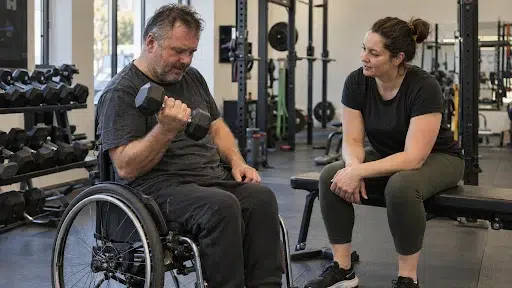
The NDIS does not fund a standard gym membership. However, it may fund disability-related support that helps you exercise or attend a gym, where that support meets the funding criteria and fits your plan.
The difference is between paying for access to a fitness facility and paying for the assistance you need because of your disability.
This guide explains which costs you usually pay yourself, which supports may be available, and what to check before committing to a provider.
Why Gym Membership Fees Are Not Covered
The NDIA identifies a standard gym membership as a day-to-day living cost rather than an NDIS support. Having a fitness goal in your plan does not change that distinction.
You are generally responsible for costs such as:
- Gym joining fees and memberships
- Ordinary gym entry charges
- Standard fitness clothing
- General sporting registration fees
A recommendation from a treating professional does not, by itself, make a membership eligible for NDIS funding. The support being purchased must also be an allowable NDIS support.
Rather than seeking an exception for the membership, focus on the disability-related assistance you need to take part.
Exercise Physiology and Physiotherapy for Disability-Related Goals
Exercise physiology or physiotherapy may be funded when it addresses your disability-related functional needs and meets the relevant criteria.
For example, an assessment may identify a need to improve balance, maintain mobility or develop the strength required for everyday tasks.
A qualified practitioner can assess your abilities, recommend suitable exercises and review your progress. Sessions may take place in a clinic, at home or in a gym, depending on what is appropriate.
The setting does not determine whether the service is fundable. General fitness, weight loss or an ordinary exercise program is not automatically covered because an allied health professional delivers it. Before booking, confirm:
- The disability-related purpose of the sessions
- The practitioner’s qualifications
- Whether your plan includes suitable funding
- Which support item will be used
- Whether facility access is included or charged separately
Funding for a professional session should not be treated as permission to claim a separate gym membership.
Personal Training Is Different From Therapy
Personal training and exercise physiology are not interchangeable. A personal trainer provides fitness instruction. An accredited exercise physiologist is an allied health professional who can assess and deliver exercise-based interventions within their professional scope.
Some disability-related physical wellbeing supports may be available through an appropriate funding category. However, personal training cannot be billed as therapy, and an ordinary fitness program is not automatically an NDIS support. The provider being NDIS-registered does not make every service they offer fundable.
If you are considering personal training, check the proposed service, qualifications, support item and plan funding before agreeing to sessions. Ask for a written explanation rather than relying on a general claim that the trainer “accepts NDIS”.
Support Worker Assistance at a Mainstream Gym
A participant may be able to use suitable funding for a support worker to help them attend a gym while paying the membership themselves.
The worker’s role should address disability-related needs. Depending on the participant, this might include assistance with communication, personal care, moving around the facility, or following an agreed routine.
A support worker does not replace a qualified exercise professional. They should not prescribe exercises or provide clinical advice outside their qualifications.
For example, a participant might pay their own gym fees, receive a program from an appropriately qualified practitioner and use funded support-worker assistance to attend.
These are separate services and should be clearly identified in agreements and invoices.
Evidence for Exercise-Related Support
A useful funding request explains the barrier you face and the assistance needed to overcome it.
“Wanting to get fitter” gives little information about disability support needs. More specific evidence might describe difficulty transferring, reduced balance, or the assistance required to participate safely. Relevant information may include:
- The functional impact of your disability
- The activities you currently find difficult
- The proposed support and expected benefit
- How often support is needed
- How progress will be reviewed
- Why the recommendation is appropriate and represents value for money
The NDIA makes funding decisions. A provider’s recommendation or an available budget does not guarantee approval.
Transport and Gym Access
Getting to the gym can be a separate barrier. Transport assistance may be available where it meets the relevant disability-related criteria and fits your plan. However, choosing to attend a gym does not automatically make every journey fundable.
Check whether you need help travelling, assistance from a worker during the journey or another transport arrangement. These costs may be treated differently.
It is also worth asking the gym about accessible entrances, bathrooms, equipment spacing and entry arrangements for support workers before purchasing a membership.
Group Activities and Other Ways to Stay Active
A gym is only one option. Walking groups, swimming, community recreation and adapted sports may better suit your interests or support needs.
Services offering group and centre-based activities may help participants access suitable activities and spend time with others.
However, joining a structured program does not automatically make every cost fundable. Disability-related assistance may be covered while ordinary entry fees, equipment hire or activity charges remain your responsibility.
Ask providers to separate support costs from participation costs so you know what your plan may pay and what you will need to budget for yourself.
Check the Costs Before You Commit
Before signing a gym or exercise-support agreement, request a clear breakdown of:
- Membership and joining fees
- Professional session charges
- Support-worker hours
- Transport or provider travel charges
- Cancellation terms
- Any additional facility fees
Check the relevant funding with your NDIA contact or support coordinator. If you use a plan manager, ask them to review the proposed billing arrangement too.
Do not assume a gym package is eligible simply because it is advertised as “NDIS-funded”. Each component needs to be considered separately.
Staying Active With Melbourne True Care
At Melbourne True Care, we help participants discuss the practical assistance they need to take part in everyday activities.
Our team can explain whether support-worker assistance is suitable for attending a gym and how it could work alongside recommendations from your treating professionals. Where personal care is required, our assistance with personal activities can be discussed as part of that arrangement.
Gym memberships remain your responsibility, and exercise programs should be guided by appropriately qualified professionals.
If you would like to discuss support to stay active, contact Melbourne True Care to talk through your needs and current plan.

No comment yet, add your voice below!